Get help and learn how to report
If you or someone you know is in immediate danger, please call 911.
SAN FRANCISCO BAY AREA HUMAN TRAFFICKING HOTLINE
☎ 24/7 confidential resources for survivors – interpretation in over 240 spoken languages – available 24/7 📞 call 415-907-9911
The San Francisco Human Trafficking Hotline (SFHTH) confidentially and safely connects survivors of human trafficking and their support networks with resources and protections. Through its services and collaboration with the local and national stakeholders, the hotline empowers survivors to regain control, navigate their options, and determine their next steps.

Safety 4 the Bay
Safety4theBay is a Bay Area–wide safety and reporting resource developed through No Traffick Ahead. While No Traffick Ahead’s work is grounded in preventing human trafficking and exploitation, Safety4theBay recognizes that trafficking often intersects with other forms of violence and abuse. The platform connects individuals to confidential support, reporting options, and local services across a range of safety concerns, helping strengthen prevention, awareness, and response across the region.
It’s a Penalty is proud to share Safety4theBay as a trusted local resource as part of our Super Bowl 2026 anti–human trafficking campaign.
Santa Clara County Human Trafficking Task Force
📞 (not monitored 24/7): (408) 792-2700 and/or httips@dao.sccgov.org.
Community Solutions
📞 (available 24/7): (877) 363-7238. This is a confidential service provider for those wishing to seek services without directly reporting to Law Enforcement.
National Human Trafficking Tip Line
📞 (available 24/7): (888) 373-7888; help@humantraffickinghotline.org; text: 233733; and/or visiting this site Contact Us | National Human Trafficking Hotline. Please note, all referrals to the National HT Tip line will be routed directly to the regional Human Trafficking Tactical Operation Center (HT-TOC) during the operational period from January 26th – February 7th.
Discreet and Anonymous Reporting
Reports can be made anonymously, confidentially and discreetly. Your identity does not have to be disclosed, ensuring your privacy and protection.
Guidance for Potential Victims – Safety First
Your safety is the top priority. If you think someone might be monitoring your phone or internet use or emails, or if you feel unsafe, please consider your personal safety before reaching out to an organisation or helpline.
Guidance for Observers – Stay Safe
Stay Safe: Your safety and the safety of potential victims come first. Avoid confronting traffickers or victims directly, as this could make the situation more dangerous.
Take Notes: If you notice something concerning, write down details like descriptions, behaviours, locations, and times, but do not get involved directly.
About the It’s a Penalty Campaign
It’s a Penalty: Harnessing the Power of Sport to Combat Human Trafficking
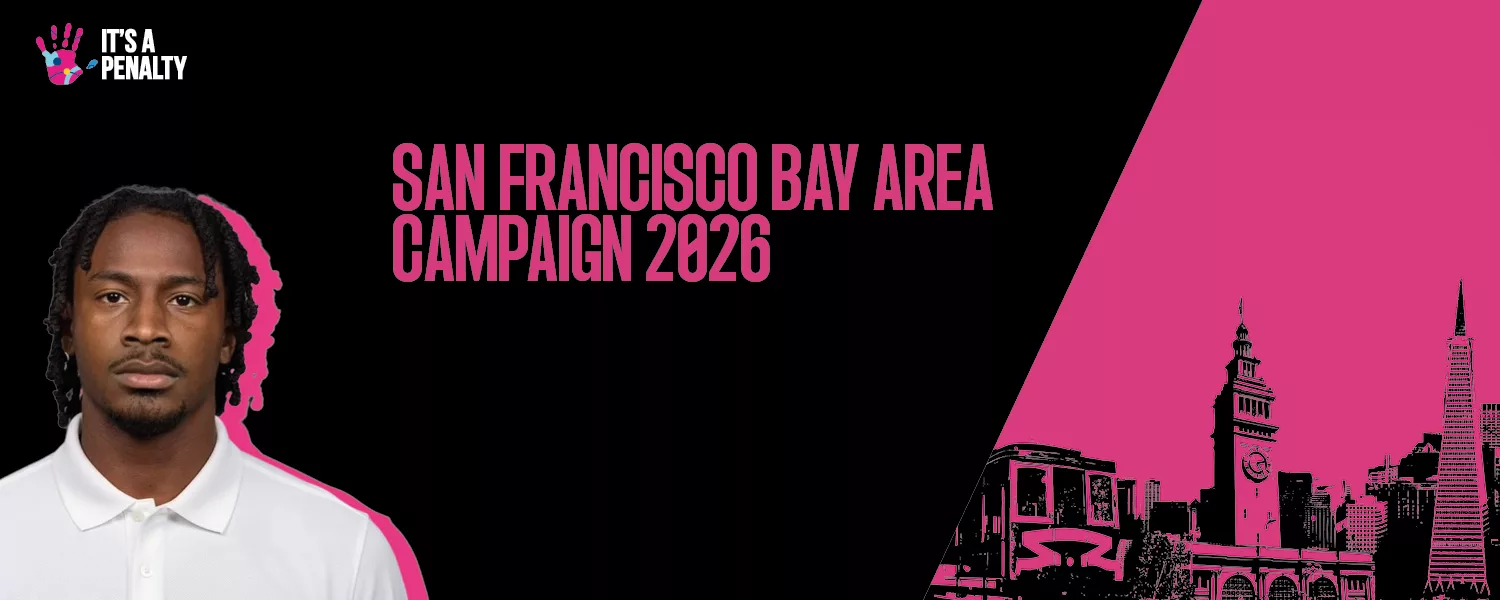
It’s a Penalty has launched its 23rd global human trafficking prevention campaign ahead of Super Bowl LX in the San Francisco Bay Area. This initiative brings together major hospitality, media and sports partners, and high-profile ambassadors to educate communities and empower the public with the tools needed to recognise and report human trafficking and exploitation.
Human trafficking affects millions of people worldwide. The campaign uses the Super Bowl platform to focus attention on the issue, highlight how trafficking impacts individuals and communities, and mobilise action to prevent abuse and exploitation.
What is human trafficking?
Human trafficking involves exploiting a person through force, fraud or coercion for profit. It can happen in any community and victims can be any age, race, gender, or nationality.
learn about a few types of human trafficking:


Recruitment methods:
There are various tactics that traffickers use in order to recruit potential victims, including grooming, through friendship or ‘love’, face to face promises of work, or online job offers, or offers of help (in return for payment later).
Awareness of potential behaviors and patterns:
Victims of trafficking can be found in a variety of situations. You can play a role in recognising potential patterns and behaviours of human trafficking. Reporting concerns is the first step in identifying human trafficking in your community and can prevent individuals being recruited into exploitative situations.
Not all the information listed below is present in all situations involving trafficking. While the presence or absence of these observations does not confirm or rule out human trafficking, their presence should prompt reporting to trained professionals or law enforcement immediately.
Human trafficking and exploitation is happening in our communities and the places we visit, often hidden.
AN INDIVIDUAL EXPERIENCING HUMAN TRAFFICKING MAY:
- Show fear or anxiety, and appear to be monitored or controlled by another person who speaks for them.
- Show behavior changes, appear withdrawn or secretive
- Work under threats or intimidation and can’t always leave freely.
- Suffer injuries that appear to be the result of control measures.
- Have no control of their identity or travel documents, and be distrustful of authorities.
- Be unsure of where they are, or unfamiliar with their surroundings.
- Have no access to their earnings
- Be unable to negotiate working conditions
- Work excessively long hours over long periods
- Have limited or no social interaction
- Have limited contact with their families or with people outside of their immediate environment
- Think that they are bonded by debt
Not all signs listed are present in every human trafficking situation, and the presence or absence of any of the indicators is not necessarily proof of human trafficking.
Facts & figures

Human trafficking generates $236 billion in profits per year from forced labor.
50 million people are trapped in trafficking today.
1/3 of detected trafficking victims are children.
Human trafficking cases have been reported in all 50 US states. (US Department of State, 2025 Trafficking in Persons Report: United States)
Human trafficking cases in the US continue to involve predominantly sex trafficking although service providers reported assisting significant numbers of labor trafficking victims.
Sex traffickers are increasingly operating online to both recruit and advertise victims in addition to locations such as bars, massage parlors, street prostitution, and escort services.
One in six of the 28,800 cases of children reported missing in the US in 2023 were likely victims of child sex trafficking.
1 in 5 homeless youth in California has experienced some form of trafficking. (Study at Covenant House New York)
Myth-busting
There are plenty of misconceptions about human trafficking.
By myth-busting and sharing the truth, people can have a better understanding of what it is and how to spot it.
This knowledge can empower communities and help protect people affected by human trafficking.
8 common misconceptions and the realities:


Major Sporting Events: An Opportunity for Change
It’s a Penalty harnesses the power of sport to raise awareness and educate about human trafficking and exploitation in order to prevent it.
Human trafficking is the fastest growing illegal business in the world today affecting 50 million people. It exists everywhere and no city is exempt. Major sporting events like the Super Bowl, Olympics & Paralympics, UEFA Euros and FIFA World Cup present unique opportunities to unite communities, collaborate across sectors, and raise awareness about these pervasive issues in order to prevent them and to leave a positive legacy. With large crowds and increased visibility, these events are powerful platforms to educate and inspire action against exploitation while addressing the vulnerabilities that traffickers often exploit. For organisations, this heightened attention creates an opportunity to highlight the year-round nature of trafficking and to push for systemic change.
While these events don’t create trafficking issues outright, they can amplify existing patterns and displace them geographically. Research shows that the influx of visitors often shifts trafficking activities rather than significantly increasing their overall prevalence.
NFL Stars Against Human Trafficking

Kyle Arrington, Super Bowl Champion

Collette V. Smith, NFL’s First Black Female Coach, New York Jets

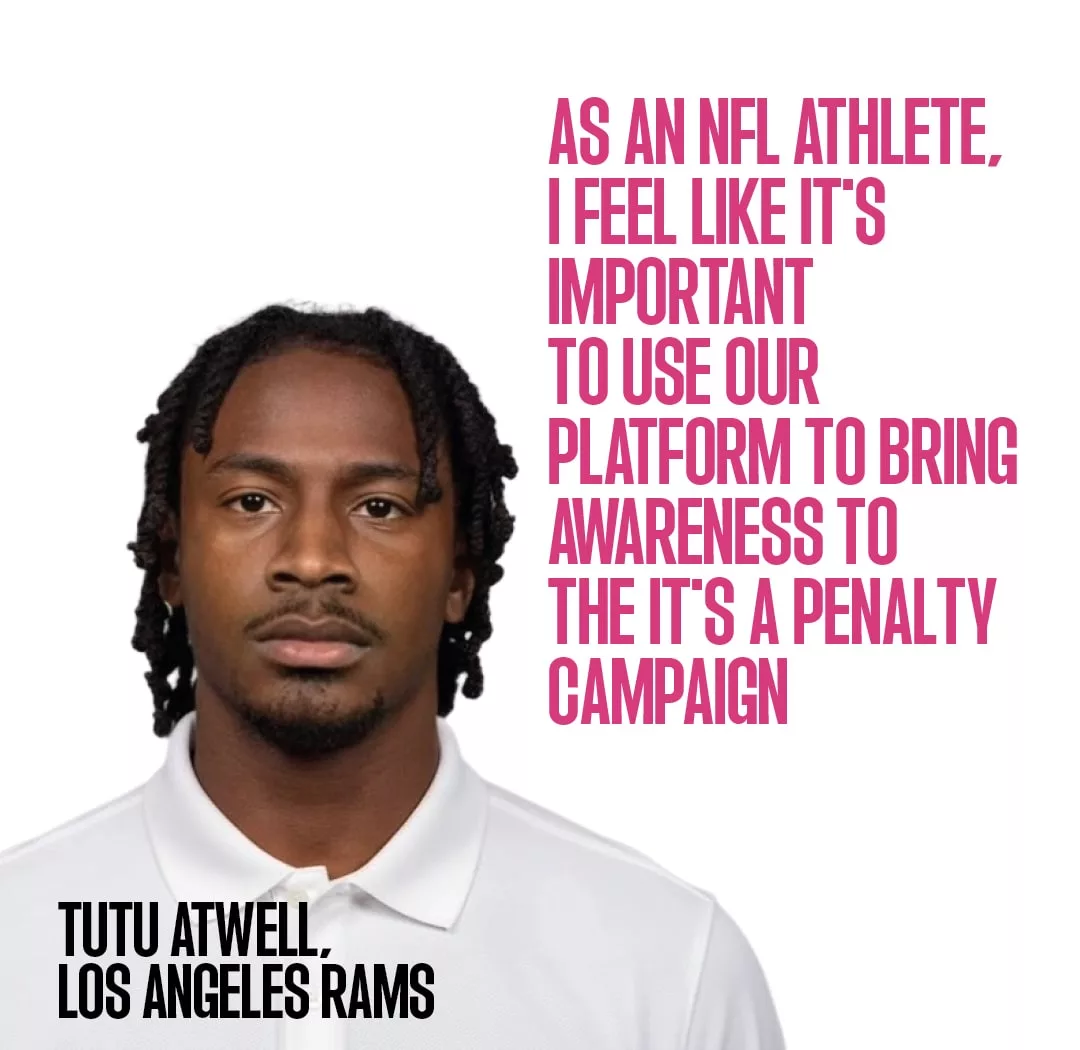
Tutu Atwell, Super Bowl Champion, Los Angeles Rams
Thank you to our Partners
Partnership and Collaboration
To achieve our mission of preventing abuse, exploitation, and trafficking, It’s a Penalty works closely with a wide range of strategic stakeholders, including: High-profile athletes, leaders in the travel, hospitality, and tourism industries, sporting governing bodies and host committees, and NGOs operating on the ground in host cities.
Our partnerships are aligned with a shared goal: to prevent human trafficking and create lasting impact.
Through It’s a Penalty events, such as campaign press launches, volunteers outreaches and partner training, we bring together key actors from various sectors, fostering collaboration and building strong networks. These connections help ensure effective prevention efforts and leave a positive legacy of cross-sector relationships dedicated to preventing human trafficking.