
What is Human Trafficking?
Human trafficking is the exploitation of a person through force, fraud, or coercion for the purpose of profit.
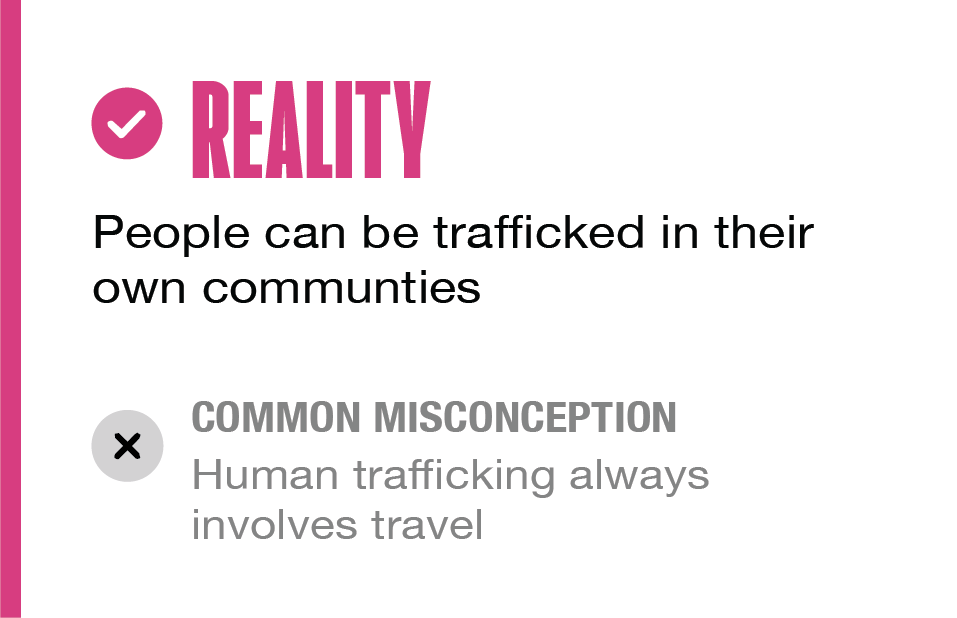
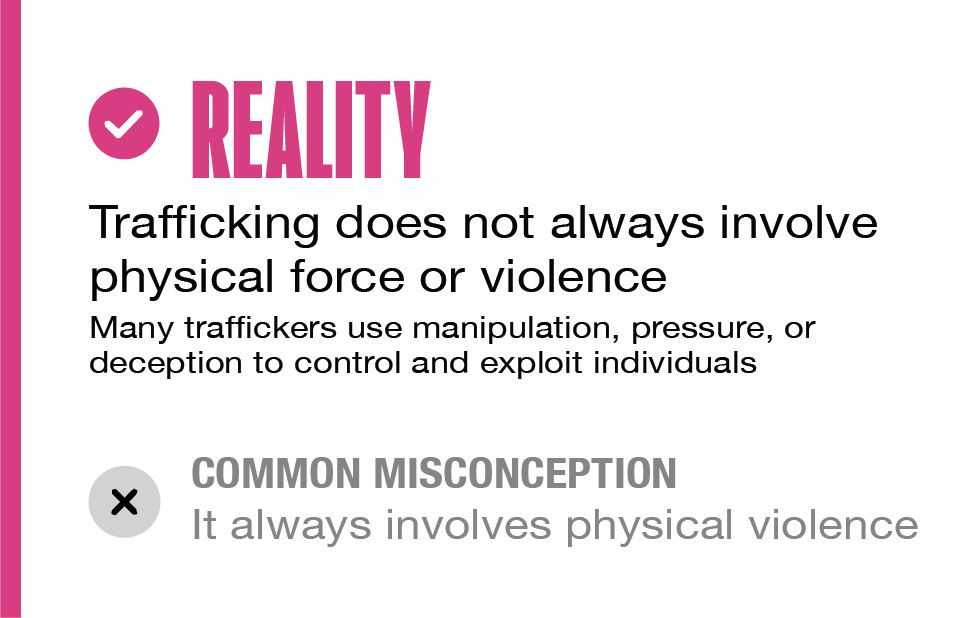
It does not require movement or crossing borders and can happen in any community. It often involves manipulation, pressure, or abuse of vulnerability rather than physical restraint. For individuals under 18, any commercial sexual exploitation is considered human trafficking, regardless of whether force, fraud, or coercion is present.
How recruitment happens
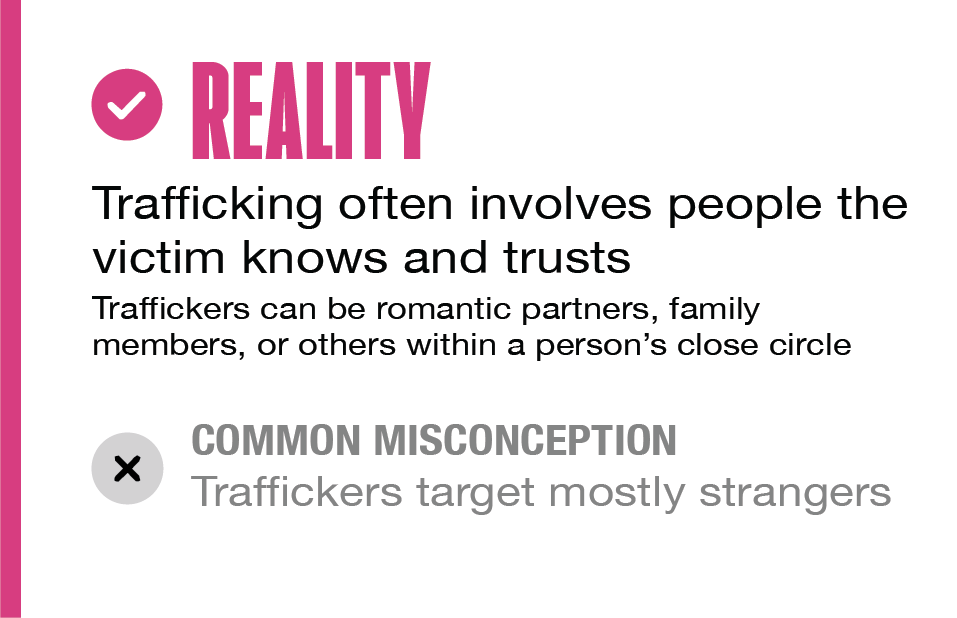
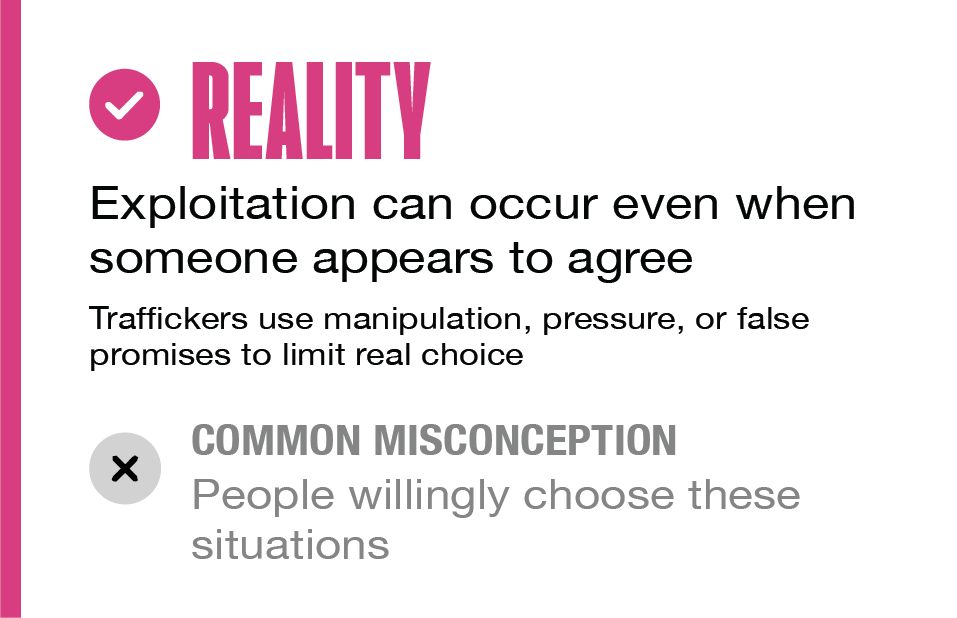
Traffickers use a range of tactics to recruit and control individuals. These can include grooming, building trust through friendship or romantic relationships, and making false promises about jobs or opportunities.
Recruitment can happen in person or online, including through social media, messaging apps, or job postings. In some cases, individuals are offered help or financial support that is later used to create pressure, control, or debt.
forms of human trafficking
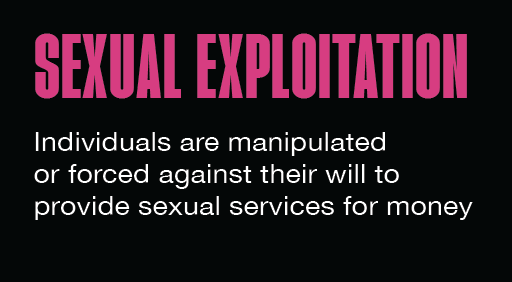
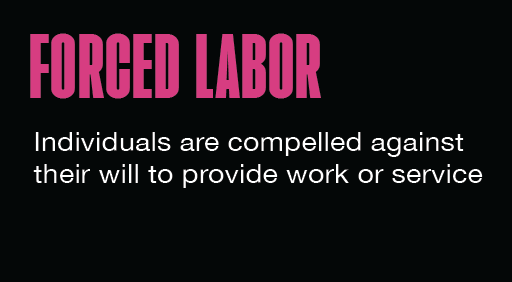
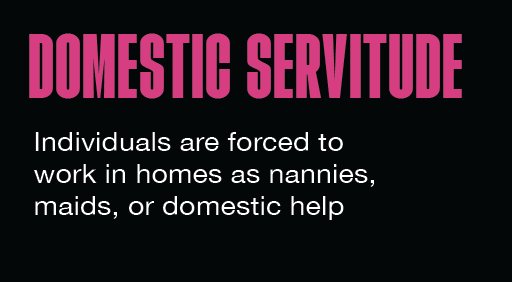
forms of human trafficking
Recognizing potential indicators
Trafficking indicators may be subtle. No single indicator confirms exploitation, but patterns of concern may signal that someone needs support. If something feels wrong, trust your instincts.
- Show fear or anxiety, and appear to be monitored or controlled by another person who speaks for them.
- Show behavior changes, appear withdrawn or secretive
- Work under threats or intimidation and can’t always leave freely.
- Suffer injuries that appear to be the result of control measures.
- Have no control of their identity or travel documents, and be distrustful of authorities.
- Be unsure of where they are, or unfamiliar with their surroundings.
- Have no access to their earnings
- Be unable to negotiate working conditions
- Work excessively long hours over long periods
- Have limited or no social interaction outside of their immediate environment
- Think that they are bonded by debt
Recognizing potential indicators
Trafficking indicators may be subtle. No single indicator confirms exploitation, but patterns of concern may signal that someone needs support. If something feels wrong, trust your instincts.
- Show fear or anxiety, and appear to be monitored or controlled by another person who speaks for them.
- Show behavior changes, appear withdrawn or secretive
- Work under threats or intimidation and can’t always leave freely.
- Suffer injuries that appear to be the result of control measures.
- Have no control of their identity or travel documents, and be distrustful of authorities.
- Be unsure of where they are, or unfamiliar with their surroundings.
- Have no access to their earnings
- Be unable to negotiate working conditions
- Work excessively long hours over long periods
- Have limited or no social interaction outside of their immediate environment
- Think that they are bonded by debt
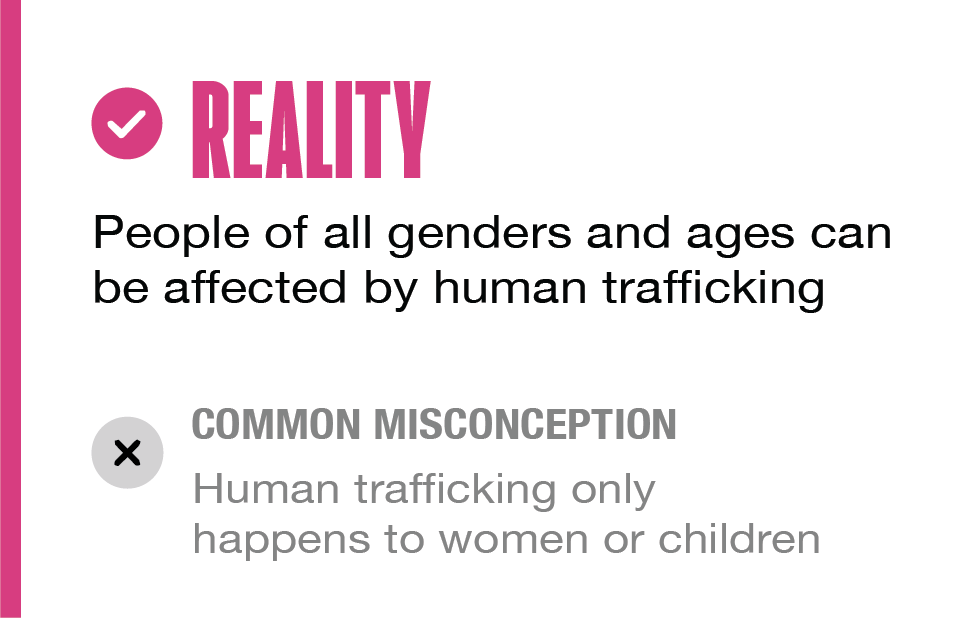
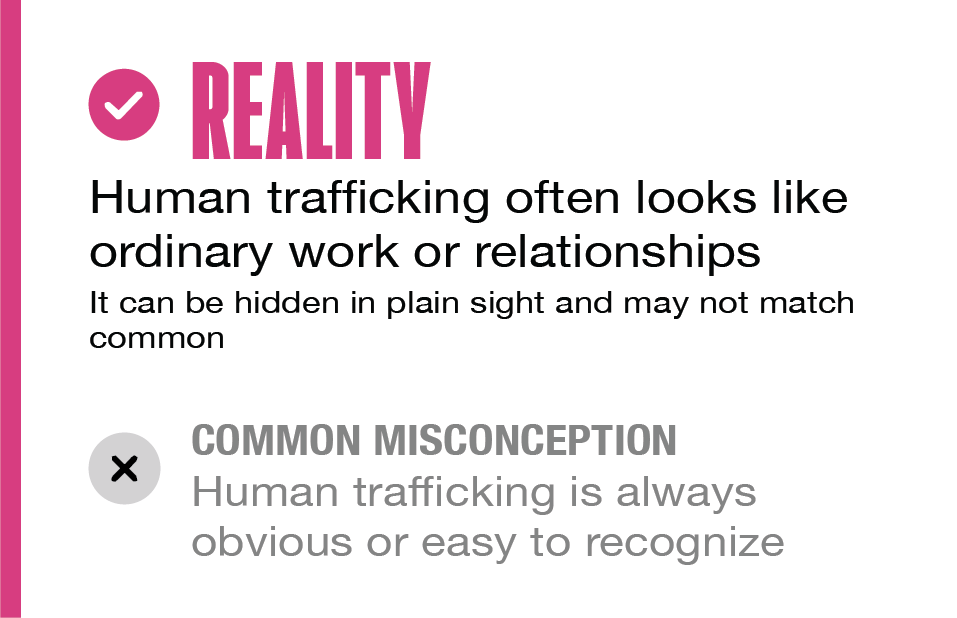
the reality of human trafficking
Human trafficking is often misunderstood. These key realities clarify who is affected, where it occurs, and how exploitation happens.
Why We Campaign Around Major Sporting Events
Major sporting events bring together global audiences, large-scale travel, and extensive hospitality networks. These moments create a unique opportunity to reach millions of people across the systems where trafficking can occur.
Human trafficking affects an estimated 50 million people worldwide and exists in every community. While major events do not create trafficking, they can shift existing patterns and increase visibility around the issue.
Our approach is rooted in prevention. By using the reach and infrastructure of major sporting events, we work to raise awareness, equip frontline industries with practical tools, and strengthen coordination across sectors.
Through partnerships with transportation providers, hotels, media platforms, and local organizations, campaigns are delivered directly at key touchpoints to help people recognize signs of exploitation and connect individuals to support.
These efforts contribute to long-term impact by increasing public understanding, improving response systems, and building sustained collaboration beyond the event itself.
Athlete Ambassadors

Athletes serve as ambassadors for the campaign, helping to increase visibility and reach wider audiences. Their public recognition draws attention to campaign messaging across transportation and hospitality settings, where awareness can have the greatest impact.
This visibility helps reinforce that preventing exploitation is a shared responsibility, particularly during major events that bring increased movement, activity, and economic opportunity to host cities.