Get Help or report a concern
If you or someone you know may be experiencing exploitation, support and resources are available.
National Human Trafficking Hotline
Help is available 24/7 for anyone who may be experiencing or concerned about exploitation. All services are free. If you or someone you know is in immediate danger, call 911. Please note this will lead to a response by the local police department.
| 1-888-373-7888 | |
| Text: 233733 (BEFREE) | |
| humantraffickinghotline.org |
For concerns involving missing or exploited children, you can also contact:
National Center for Missing And Exploited Children (NCMEC)
| 1-800-THE-LOST (1-800-843-5678) | |
| CyberTipline |
Confidential Support is Available
You can receive confidential and discreet connections to services and support for human trafficking and exploitation by calling the hotlines or directly contacting the local resources.
Guidance for Potential Victims – Safety First
Your safety is the top priority. If you think someone might be monitoring your phone or internet use or emails, or if you feel unsafe, please consider your personal safety before reaching out to an organization or helpline.
Guidance for Observers – Stay Safe
Stay Safe: Your safety and the safety of potential victims come first. Avoid confronting traffickers or victims directly, as this could make the situation more dangerous.
Take Notes: If you notice something concerning, write down details like descriptions, behaviors, locations, and times, but do not get involved directly.
Explore resources in select host cities






How the Campaign Works
This campaign leverages the visibility of major events and the reach of global and U.S. partners to raise awareness, connect people to support, and strengthen prevention efforts across host cities.
Placed Across Key Travel Touchpoints
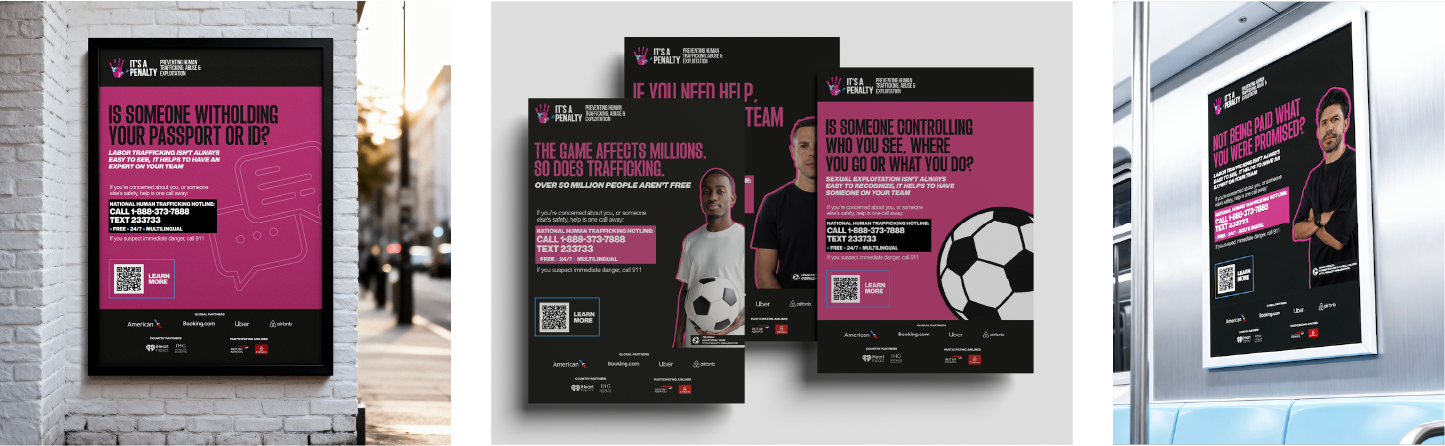
Campaign messaging is placed across travel and hospitality environments where large numbers of visitors, workers, and residents intersect, helping us reach people in high-traffic, real-world settings throughout the tournament period.
Clear Pathways to Help
All campaign materials direct individuals to trusted support and reporting options. The goal is not only to raise awareness, but to make it easier for people to access help and identify where to turn if they are concerned about exploitation.
Localized for Each Host City
Each featured host city has a dedicated campaign page with city-specific information, local organizations, and relevant support pathways. This localized approach helps ensure that campaign messaging is connected to real resources on the ground and reflects the needs of each community.
Training and Capacity Building
The campaign delivers training for frontline employees and the general public to help identify signs of exploitation and respond safely. These trainings support prevention efforts and strengthen the ability of individuals and organizations to recognize and report concerns.
Public Awareness and Local Launches
The campaign is supported through press conferences and local launch moments in selected host cities. These events bring together partners, media, and local stakeholders to amplify visibility, highlight available resources, and strengthen cross-sector coordination.
Powered by Partnership
Collaboration with corporate partners, local organizations, and frontline stakeholders allows the campaign to scale across multiple channels while maintaining strong local relevance.